Rev. Soc. Bras. Enferm. Ped.2024;24:eSOBEP202407.
Institutional and visitation policies for family participation in pediatric intensive care care

DOI: 10.31508/1676-3793202407i
Abstract
Objective
To analyze institutional policies of Pediatric Intensive Care Units (PICUs) for family participation in the care of hospitalized children.
Methods
This was a qualitative, descriptive and exploratory study, based on documentary analysis guided by content analysis and the Child and Family Centered Care (CFCC) model. Searches were made for Brazilian laws, resolutions and policies related to family participation in the context of PICU hospitalization, and a survey of all PICUs in the city of São Paulo was conducted to analyze care and visitation policies on their freely accessible institutional websites.
Results
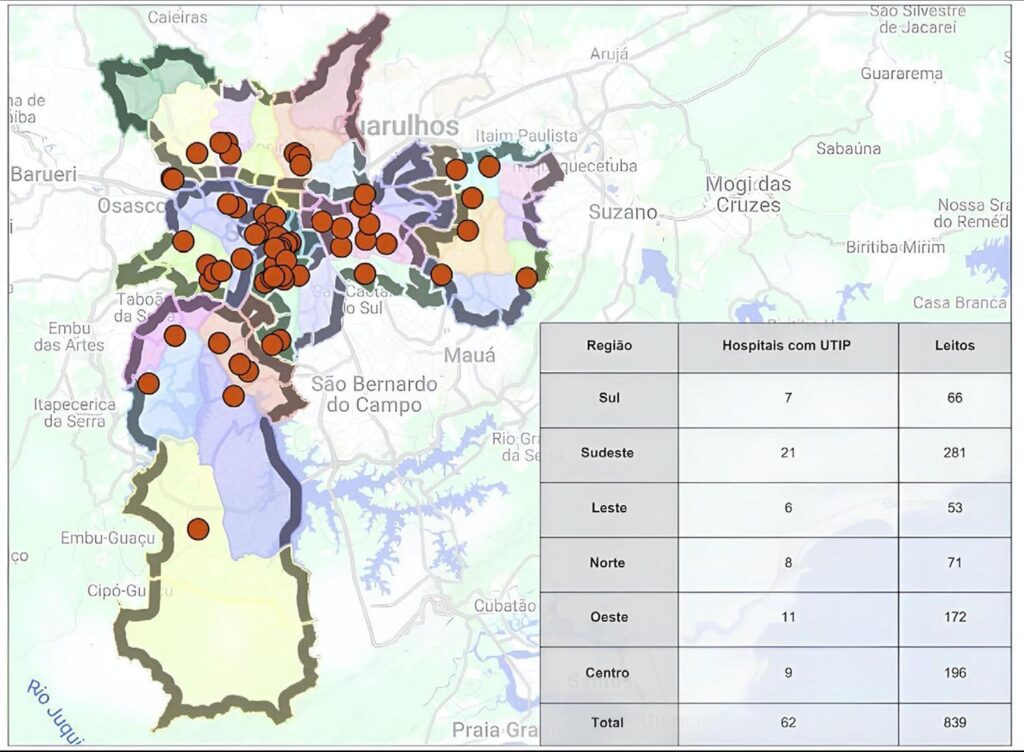
The study showed that Brazilian legislation supports the importance of family participation in the care of children in PICUs and that there is a disproportionate distribution of bed availability among the regions of the city of São Paulo. The data were organized into two categories: (1) Concepts and actions that favor participation in the care of critically ill children, which present practices aligned with CFCC; (2) Restrictions of institutional and visitation policies for family participation, which are related to barriers and/or impediments to the operationalization of CFCC.
Conclusion
Brazilian legislation ensures the right to family presence with adequate conditions and expanded visits, but it still lacks policies for the participation of minors, such as siblings. In São Paulo, the unequal distribution of PICU beds contrasts with the concentration of children, highlighting the need to strengthen institutional policies and nursing care that promote broad family participation during hospitalization.