Rev. Soc. Bras. Enferm. Ped.2024;24:eSOBEP202499.
Development of an educational booklet on caring for children with tracheostomies at home

DOI: 10.31508/1676-3793202499i
Abstract
Objective
To develop an educational booklet on caring for children with tracheostomies at home.
Methods
This is a methodological study carried out in 2024 and 2025 in four stages: conceptualization; development; implementation; and assessment. Assessment was carried out by specialists, stomal therapy nurses and nurses from the pediatric, home care and outpatient units of the Universidade de São Paulo University Hospital. After adjustments suggested by specialists, it was assessed by users, family members of children with tracheostomies. Family members under the age of 18, illiterate and visually impaired were excluded. Statistical analysis was descriptive and the Content Validity Ratio (CVR) was considered adequate if CVR ≥ 0.8. The research was approved by an ethics committee.
Results
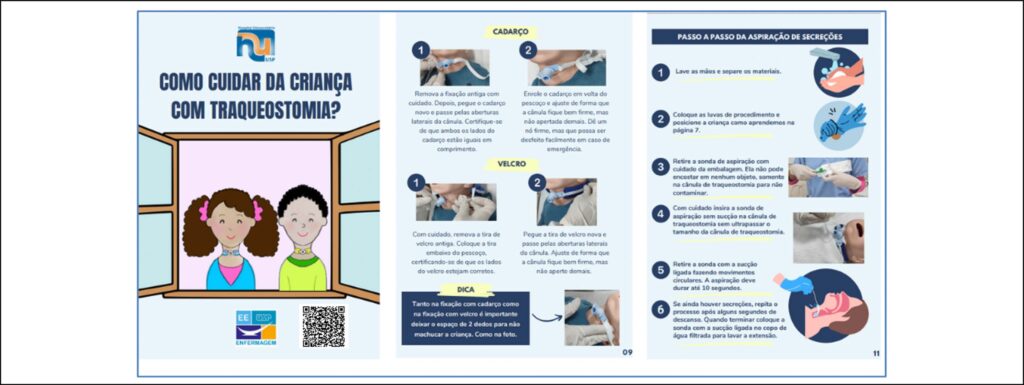
The booklet development was based on nursing theories, according to the Nursing Process stages, using standardized languages and with the aid of a decision support system. In order to provide up-to-date guidance in line with best practice, a literature review was carried out. According to the nursing diagnoses identified, expected outcomes and proposed interventions, the booklet contains child identification data, guidance on the Basic Health Unit of reference and the materials provided, followed by information on what a tracheostomy is, hand washing, positioning children, care for cleaning the stoma, handling the cannula, aspirating secretions, what to do in emergencies, feeding, hydration, sleep, clothing, hygiene, communication with children and social life. It ends with advice on family members’ health. The layout was done by professionals in the field. The booklet was made available in printed and digital versions. It was assessed and approved by 15 nurses, with an average CVR of 0.97, and 10 family members, with an average CVR of 0.95.
Conclusion
The educational booklet developed provides guidelines for comprehensive child and family care at home and can be used as educational material in preparation for de-hospitalization.
Keywords: Child; Educational technologies; Family; Pediatric nursing; Tracheostomy