Rev. Soc. Bras. Enferm. Ped.2018;18(2):82-9.

Pain assessment in children: semantic adequacy of a multidimensional instrument in a context of the northeast region

DOI: 10.31508/1676-3793201800013
Abstract
Objective
To perform the semantic adequacy of a multidimensional instrument for assessment of pediatric pain in a context of the northeast region.
Methods
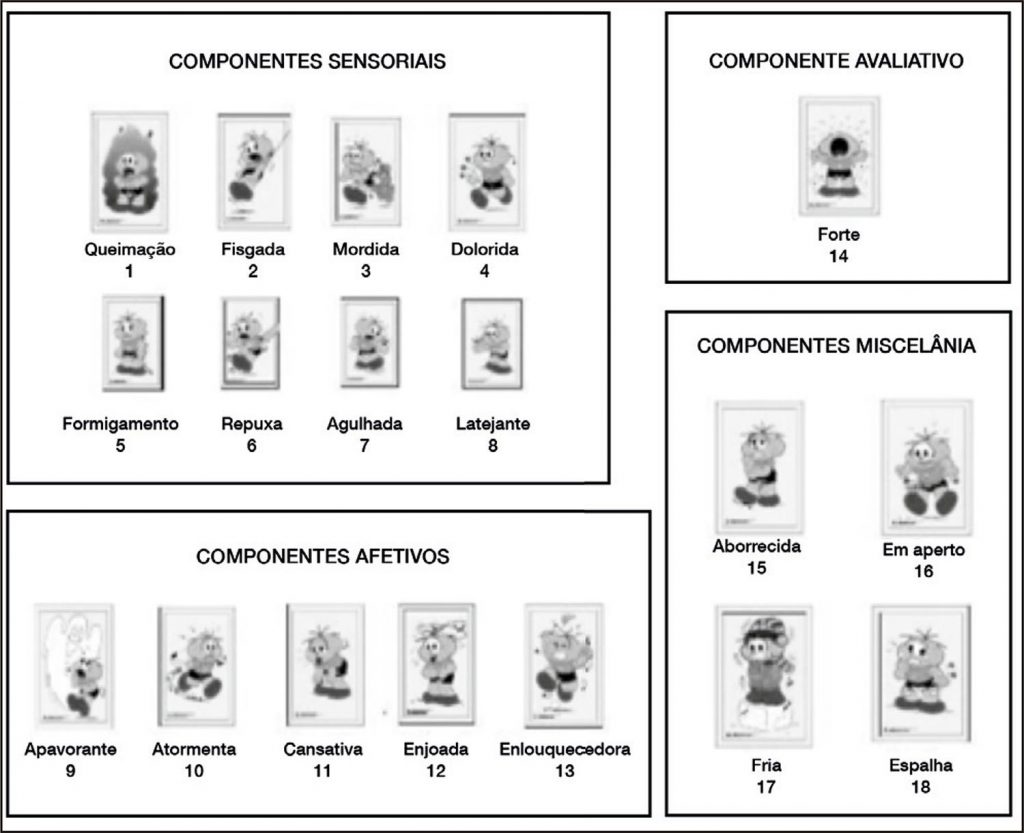
A cross-sectional study conducted in two stages with 48 children, aged between six and 12 years, hospitalized in the pediatric unit of a public hospital. Data were collected from the adapted forms of the DISABKIDS® group, and spreadsheets were elaborated in Excel for each stage of the semantic adaptation process. The 18 words and expressions of the instrument were analyzed, one by one, by the creator of the instrument in conjunction with the researcher in order to verify their use by children in the pain assessment.
Results
Of the 18 words that make up the instrument, seven were not known and used by more than 50% of the children to describe the pain. In these cases, the children suggested new words that were reapplied in the second stage. In the end, all words had become known and used by children to describe their pain.
Conclusion
The semantic adequacy made the instrument more comprehensible to the sample of this study, indicating suggestions of changes in the instrument for a context of the northeast region. However, the adjustment of the instrument can only be effected after the subsequent validation steps are performed.
Keywords: Child; Pain assessment; Pediatric nursing