Rev. Soc. Bras. Enferm. Ped.2024;24:eSOBEP202411.
The potential impact of chronobiology in the care of newborns in the Neonatal Intensive Care Unit

DOI: 10.31508/1676-3793202411i
Abstract
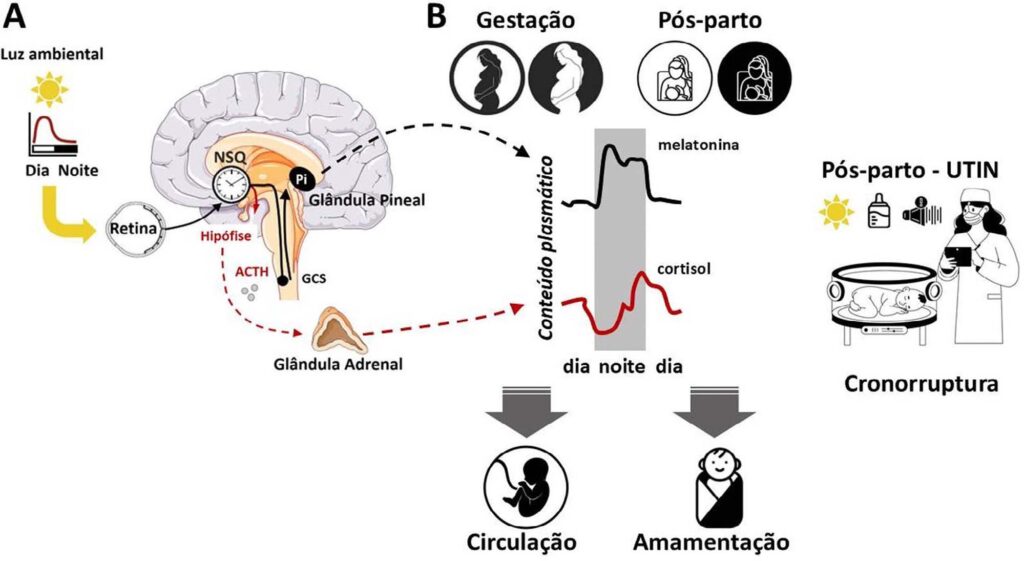
Newborns admitted to the Neonatal Intensive Care Unit (NICU) are exposed to care routines and interventions that significantly alter their biological rhythms. These interventions include exposure to irregular or continuous lighting patterns, artificial temperature maintenance, high noise levels, intermittent feeding schedules, mechanical ventilation, administration of medications, and painful or stressful procedures. The aim of this study is to reflect on the impacts resulting from the disruption of biological rhythms in newborns admitted to the NICU and to explore evidence-based strategies to disseminate chronobiological principles and foster clinical practice in this context. The variety of manipulations and environmental changes to which newborns are exposed – often chaotic and conflicting – not only compromises the development of circadian rhythms and the overall health of the newborns, but also negatively influences hospitalization duration, weight gain, and neuroendocrine development. Although the importance of circadian rhythmicity is widely recognized, the care provided to newborns in the NICU has not yet adequately incorporated these principles. In this scenario, the nursing team emerges as a central agent in implementing chronosensitive practices at the bedside to bridge this clinical gap. The need for innovative approaches is evident, with the potential to transform the NICU environment into a space that promotes healthy circadian development.