Rev. Soc. Bras. Enferm. Ped.2023;23:eSOBEP20230009.
Influence of skin protector in reading pulse oximetry in neonates

DOI: 10.31508/1676-379320240009i
Abstract
Objective:
To verify the influence of using a hydrocolloid patch as a skin protector on reading oxygen saturation in newborns.
Methods:
Observational study, carried out in a neonatal unit of a municipal hospital in São Paulo. Data collection was carried out by the researcher using an instrument organized by Recap® software on neonatal characteristics and the measurement of oxygen saturation carried out by a Dixtal® Model DX 2022 monitor and an extra-thin hydrocolloid plate. Data analysis was performed using descriptive statistics and the use of non-parametric Kruskal-Wallis tests, considering the probability of type I error or less than 5%.
Results:
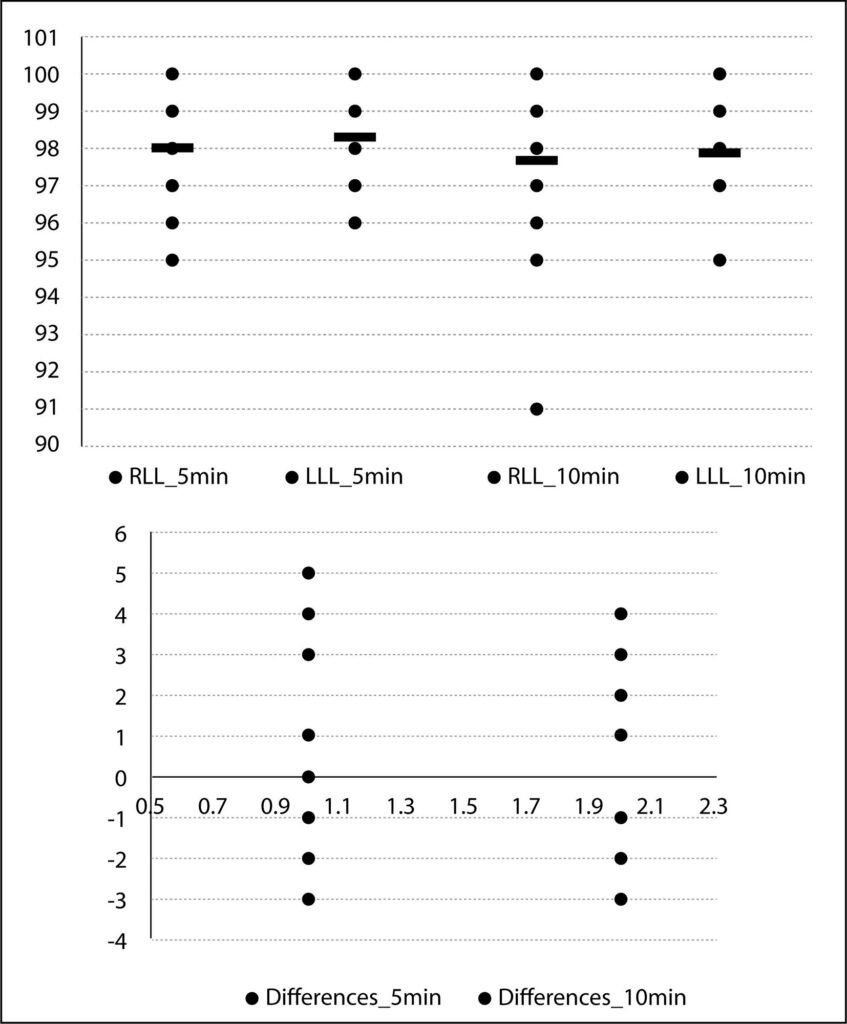
The sample consisted of 56 oxygen saturation values measured in 14 newborns with and without the use of a hydrocolloid patch to protect the skin. The average value of the oximetry reading in the right lower limb with a hydrocolloid plate was 98% (±1.73) and 97.65 (±2.46) at five and ten minutes, respectively. The value without the hydrocolloid patch was 98.2% (±1.57) and 97.8% (±1.59) at five and ten minutes respectively. It was found that there is no statistically significant difference in oxygen saturation readings (H= 0.4368, p=0.932).
Conclusion:
The use of the hydrocolloid patch as a covering on the newborn’s skin did not interfere with the reading of oxygen saturation in the studied sample
Keywords: Infant, newborn; Neonatal nursing; Nursing care; Oximetry; Pediatric nursing; Skin